
Stretch Film for Pharmaceutical Industry
July 25, 2026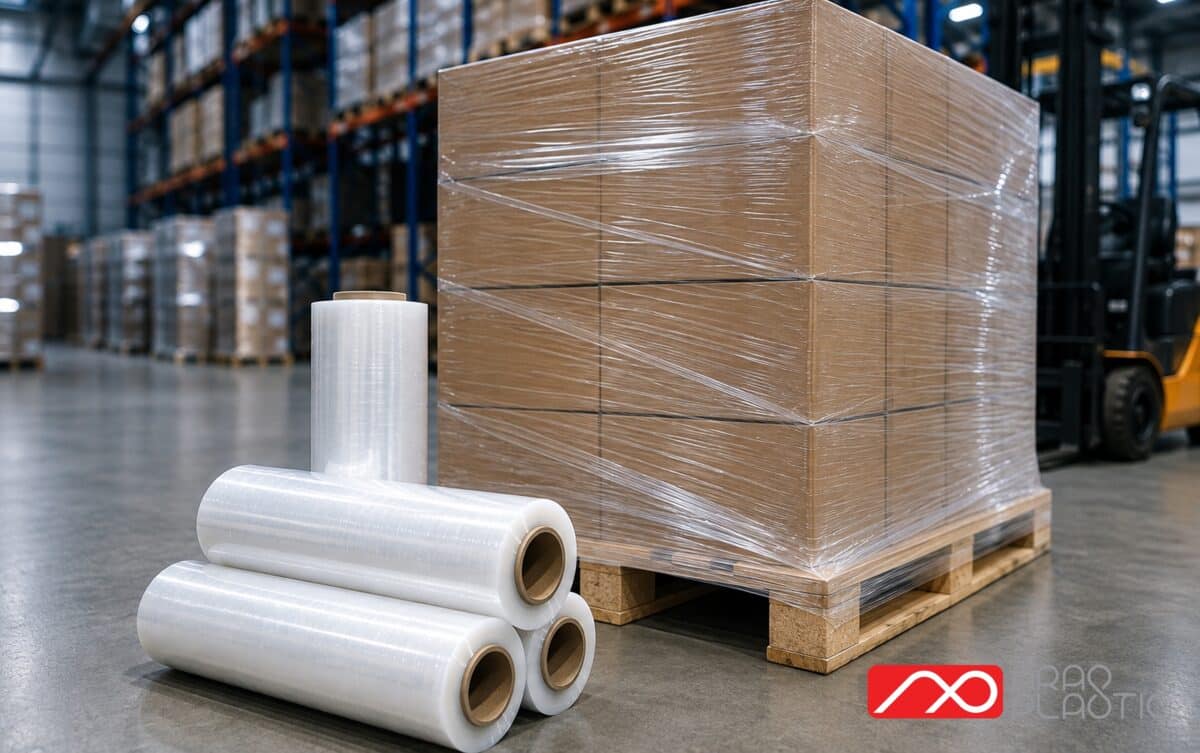
Stretch Film for Logistics: Improving Pallet Stability and Packaging Efficiency
In logistics and supply chain operations, keeping products secure from the warehouse to their final destination is essential. Pallets are exposed to movement, vibration, impact, loading and unloading, and different storage conditions throughout the transportation process. Stretch film for logistics provides an effective way to stabilize palletized goods, protect products, and improve packaging efficiency.
From manufacturers and exporters to warehouses and distribution centers, stretch film is widely used to secure cartons, boxes, and other products before shipment. However, choosing the right film and applying it correctly can make a significant difference in load stability, material consumption, and overall packaging costs.
What Is Stretch Film for Logistics?
Stretch film is a flexible plastic packaging material used to wrap and secure products, particularly palletized loads. Most industrial stretch films are produced from linear low-density polyethylene (LLDPE), which provides a combination of elasticity, tensile strength, and resistance to tearing.
During the wrapping process, the film is stretched around the load. The resulting tension creates a containment force that keeps products together and helps minimize movement during transportation.
Stretch film can be applied manually using a hand dispenser or mechanically using semi-automatic and automatic pallet wrapping machines. The appropriate type depends on the volume of packaging, load characteristics, and operational requirements.
Why Is Stretch Film Important for Logistics?
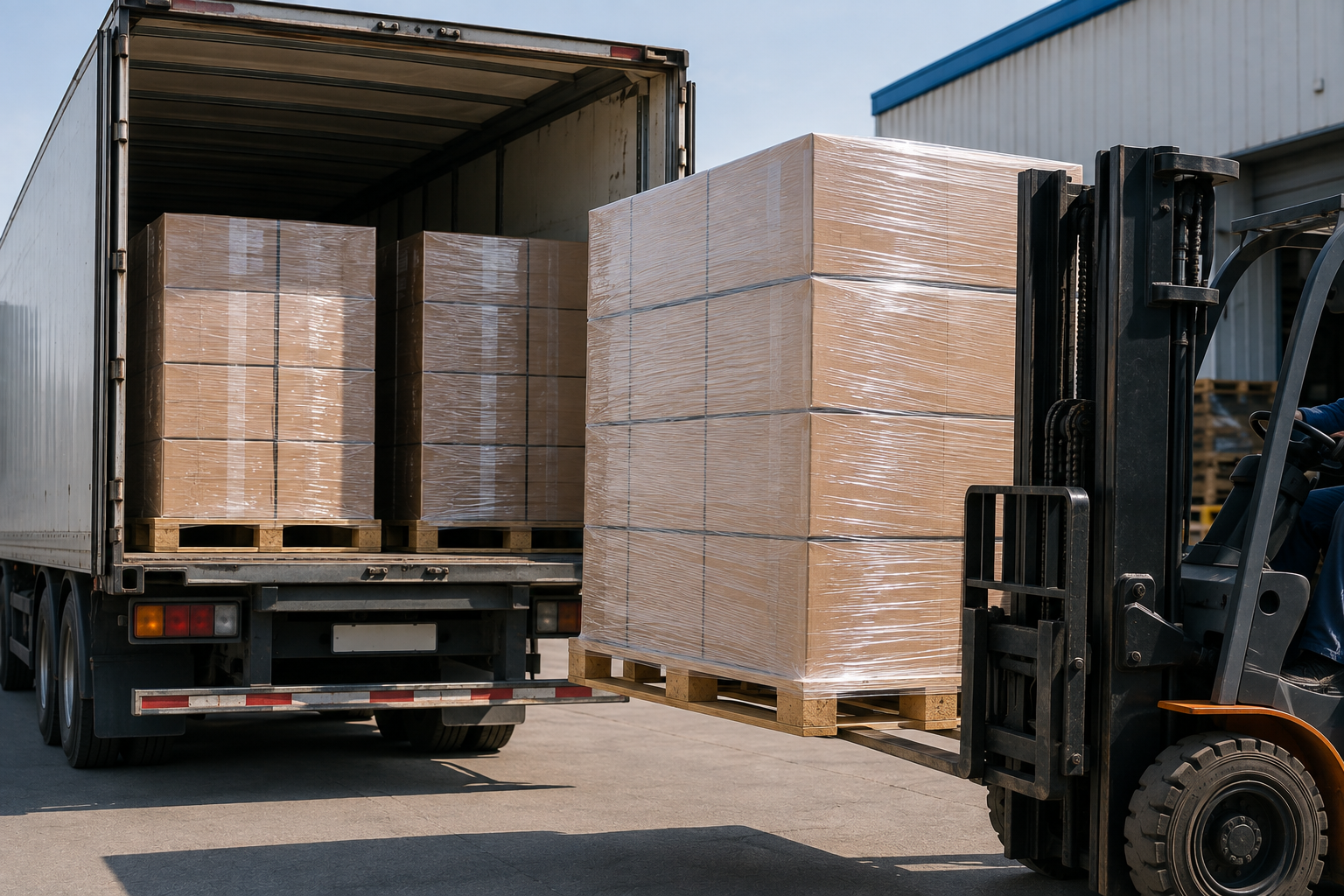
A pallet may travel through several stages before reaching its destination. It can be moved by forklift trucks, transported by road, stored in a warehouse, or handled multiple times during distribution.
Without sufficient load containment, individual boxes can shift, lean, or fall from the pallet. This can lead to product damage, unstable loads, and additional handling costs.
Using suitable stretch film for logistics helps turn individual packages into a more stable unit load. Proper wrapping can improve pallet integrity while providing an additional barrier against dust and surface contamination.
For businesses handling large shipping volumes, efficient pallet wrapping can also contribute to faster warehouse operations and more consistent packaging quality.
Main Benefits of Stretch Film for Logistics
1. Stronger Pallet Load Stability
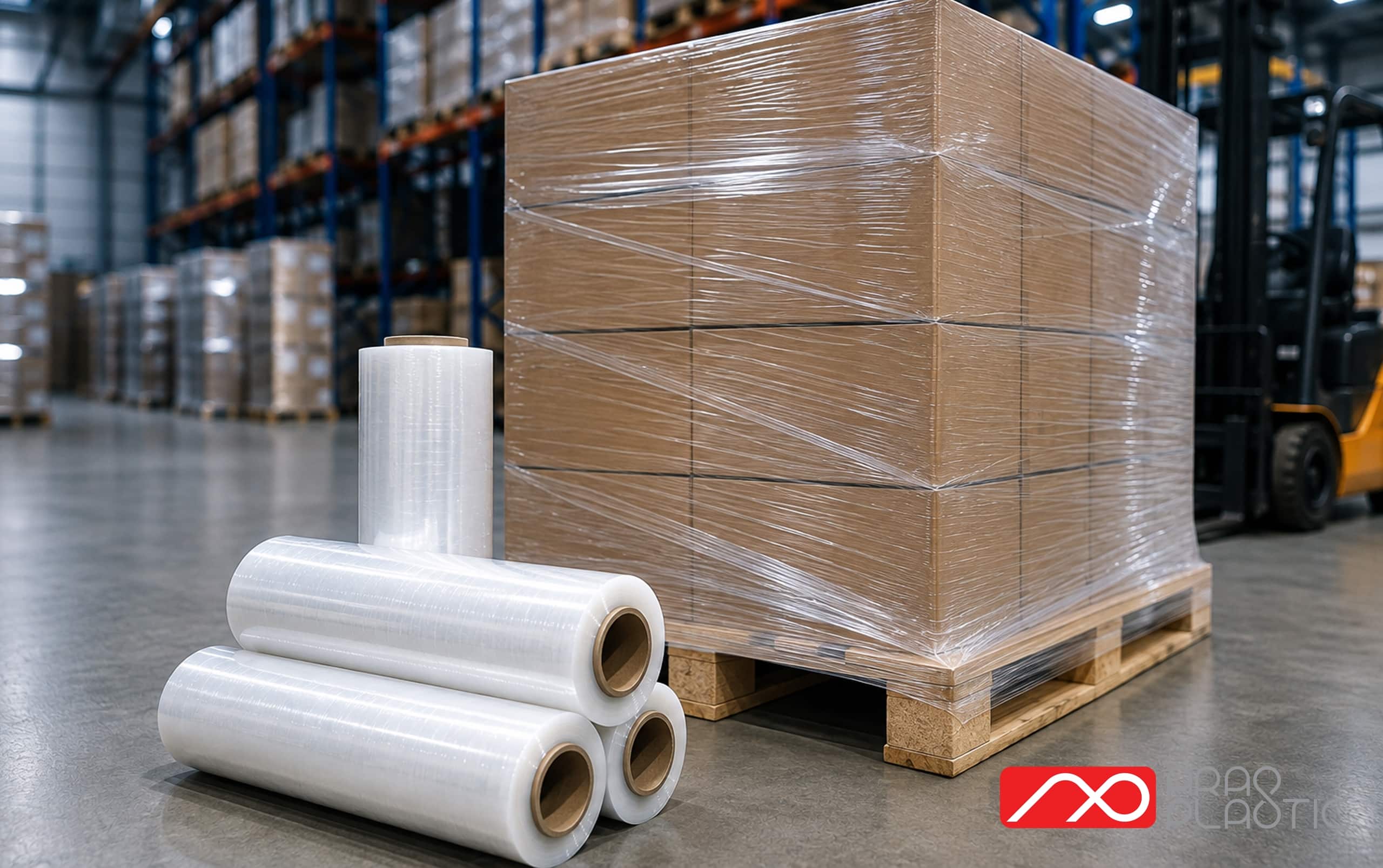
Load stability is one of the most important functions of stretch film. When properly applied, the film holds cartons and products together and helps prevent movement during transportation.
This is especially valuable for pallets that travel long distances or undergo repeated loading and unloading.
2. Protection Against Dust and Contamination
During storage and transportation, products can be exposed to dust, dirt, and other contaminants. Stretch film creates an additional layer around the load, helping keep the packaged products cleaner.
While stretch film is not a replacement for specialized moisture-proof packaging, it can provide useful protection against everyday environmental exposure.
3. Efficient Use of Packaging Material
Modern stretch films can provide high performance without necessarily requiring excessive film thickness. The goal is to achieve the required load containment using an appropriate amount of material.
Film properties such as tensile strength, puncture resistance, elongation, and holding force should therefore be considered when selecting packaging film.
A stronger film may allow packaging teams to reduce unnecessary layers while maintaining suitable pallet stability.
4. Increased Packaging Speed
Logistics operations often handle dozens, hundreds, or even thousands of pallets every day. Manual packaging can become time-consuming as shipment volumes increase.
Machine stretch film used with automatic or semi-automatic wrapping systems can improve wrapping speed and consistency. This can help warehouses maintain a more efficient packaging workflow.
5. Easier Handling and Storage
A well-wrapped pallet is easier to move and handle because the individual packages are secured together.
This is particularly important in warehouses where pallets are frequently transported by forklifts or pallet trucks. Improved containment can help reduce the risk of products shifting during internal transportation.
How to Select the Best Stretch Film for Logistics
There is no single stretch film that is ideal for every application. The correct product should be selected based on the load, wrapping system, transportation conditions, and required performance.
Film Thickness
Film thickness is an important specification, but it should not be the only factor considered. A thicker film is not automatically the best option.
The appropriate thickness depends on the weight and characteristics of the load, the required puncture resistance, and the wrapping process.
Stretch and Elongation
The ability of a stretch film to elongate during application affects both performance and material consumption.
A suitable film should stretch effectively while maintaining enough tension to secure the pallet. The required stretch level depends on the film formulation, wrapping equipment, and characteristics of the load.
Tensile Strength and Puncture Resistance
Heavy or irregular loads can place greater stress on packaging film. Sharp corners, exposed edges, or unstable products can increase the risk of punctures and tears.
For demanding logistics applications, stretch film with appropriate tensile strength and puncture resistance can provide better load containment and reliability.
Load Size and Weight
The dimensions and weight of the pallet should always be considered. Lightweight cartons may require a different film specification from heavy industrial products.
The shape of the load is also important. Irregular pallets can require stronger containment and a carefully controlled wrapping pattern.
Hand Stretch Film or Machine Stretch Film?
The choice between hand and machine stretch film depends largely on the scale and nature of the operation.
Hand stretch film is suitable for low-volume packaging, smaller warehouses, retail operations, and situations where pallets vary significantly in size and shape. It requires minimal equipment and provides flexibility for operators.
Machine stretch film is more appropriate for high-volume logistics environments. Automatic and semi-automatic wrapping machines can apply film with controlled tension and consistent wrapping patterns.
For companies shipping large numbers of pallets every day, machine wrapping can improve productivity and reduce variations between individual wrapped loads.
How to Use Stretch Film Effectively
Even high-quality stretch film may perform poorly if it is applied incorrectly. Proper wrapping technique is essential for achieving reliable load containment.
The film should be anchored securely near the bottom of the pallet before wrapping upward. The lower part of the load should receive adequate containment to help connect the products with the pallet.
During wrapping, sufficient overlap should be maintained between film layers. The operator or wrapping machine should also maintain consistent tension throughout the process.
For automated systems, parameters such as wrapping speed, film tension, pre-stretch, and the number of rotations should be adjusted according to the load.
Overwrapping can increase material costs without providing meaningful additional protection, while underwrapping may result in poor load stability. The objective is to find the right balance between stretch film consumption and pallet performance.
Stretch Film for Export and Long-Distance Transportation
Export shipments often require additional attention to packaging because products may be exposed to longer transportation routes and more handling points.
For international logistics, stretch film can help maintain pallet integrity throughout loading, transportation, unloading, and warehouse handling.
However, the film specification should be selected according to the type of product and transportation conditions. For example, heavy industrial products may require higher puncture resistance than lightweight cartons.
For long-distance shipping, businesses should evaluate the complete packaging system rather than relying on stretch film alone.
Common Applications of Stretch Film in Logistics
Stretch film is used across many industries and logistics environments, including:
- Warehouses and distribution centers
- Manufacturing facilities
- E-commerce fulfillment centers
- Food and beverage logistics
- Automotive parts distribution
- Pharmaceutical and healthcare supply chains
- Construction material transportation
- Export and international shipping
- Retail distribution
- Industrial product packaging
Its versatility makes stretch film suitable for both standard palletized products and many specialized logistics applications.
Frequently Asked Questions
What is stretch film used for in logistics?
Stretch film is mainly used to wrap and stabilize palletized products during transportation and storage. It helps keep individual packages together and can reduce movement during handling.
Is thicker stretch film always better?
Not necessarily. Film thickness is only one factor in packaging performance. Stretchability, tensile strength, puncture resistance, holding force, and application method should also be considered.
What is the difference between hand and machine stretch film?
Hand stretch film is designed for manual application, while machine stretch film is used with semi-automatic or automatic wrapping equipment. Machine wrapping is generally more suitable for high-volume logistics operations.
How can companies reduce stretch film consumption?
Film consumption can often be optimized by selecting the appropriate film specification, adjusting wrapping tension and pre-stretch, using an efficient wrapping pattern, and avoiding unnecessary layers.
Choose Reliable Stretch Film for Your Logistics Needs
If you are looking for reliable stretch film for logistics, pallet wrapping, and transportation, Aras Plastic provides stretch film solutions designed for different industrial and packaging requirements.
With the right stretch film, you can improve pallet stability, protect products during transportation, and optimize packaging material consumption.
Contact Aras Plastic to discuss your stretch film requirements and find the right packaging solution for your business.
Conclusion
Choosing the right stretch film for logistics can have a significant impact on pallet stability, product protection, packaging efficiency, and material consumption. The best solution depends on several factors, including load weight, dimensions, shape, transportation conditions, film properties, and the type of wrapping equipment.
For warehouses, manufacturers, exporters, and distribution centers, an effective stretch film strategy should focus on performance rather than simply film thickness. With the right product and correct application, businesses can create more stable loads, improve packaging consistency, reduce unnecessary material usage, and support a more efficient logistics operation.
Whether the requirement is hand stretch film for smaller operations or machine stretch film for high-volume pallet wrapping, selecting a film that matches the application is essential for achieving reliable and cost-effective packaging performance.