stretch film vs cellophane: which one is better for packaging
October 15, 2025Stretch Film for Food Industry: Safe, Reliable, and Efficient Packaging Solutions
Stretch Film for Food Industry
Food packaging plays a critical role in maintaining product quality, extending shelf life, and ensuring safe transportation. Among the many packaging materials available today, stretch film has become one of the most trusted solutions for manufacturers, distributors, warehouses, and exporters in the food industry.
Whether transporting fresh produce, bottled beverages, dairy products, frozen foods, or packaged snacks, high-quality stretch film helps protect products against dust, moisture, contamination, and physical damage while improving pallet stability throughout the supply chain.
At Aras Plastic, we manufacture premium stretch films designed to meet the demanding requirements of modern food packaging operations.
What Is Stretch Film for Food Industry?
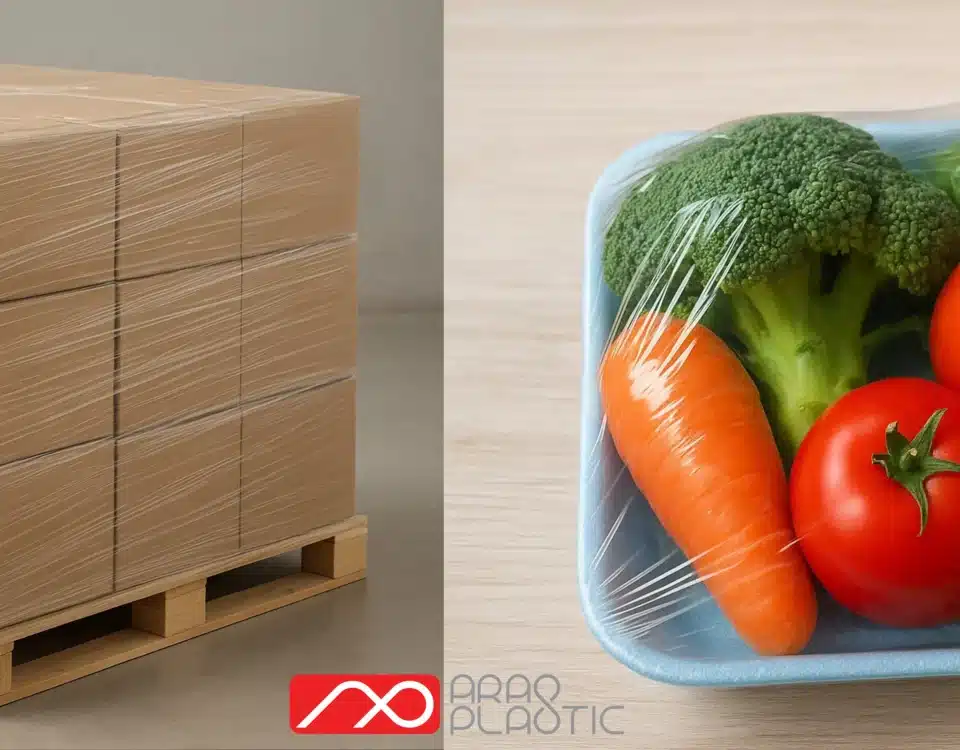
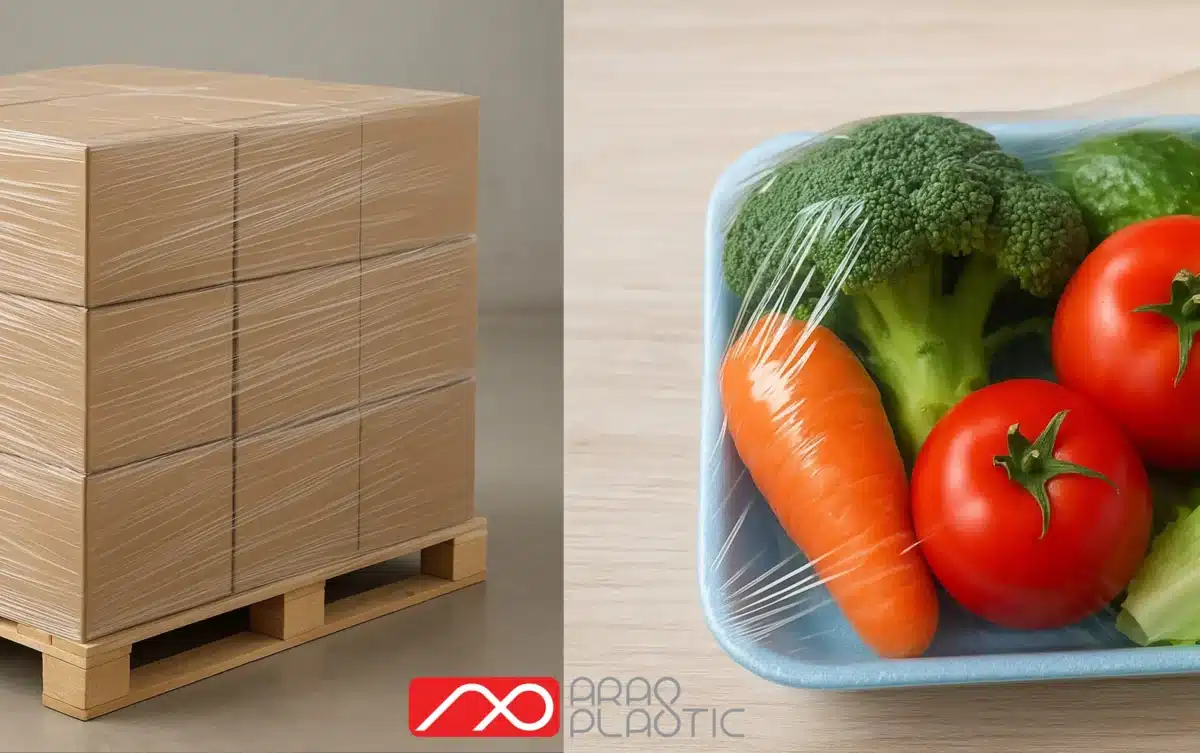
Stretch film for the food industry is a highly stretchable polyethylene (LLDPE) film used to secure products on pallets during storage and transportation. Unlike food wrap that comes into direct contact with food, industrial stretch film is primarily used for secondary packaging, wrapping boxes, cartons, trays, and palletized goods.
The primary goal is to create a stable load that minimizes movement, reduces packaging waste, and protects food products from environmental factors.
Because food products require hygienic handling, high-quality stretch film should be produced in clean manufacturing environments using premium raw materials that provide excellent clarity, strength, and consistency.
Why Food Manufacturers Use Stretch Film
Food manufacturers operate in fast-paced environments where packaging efficiency directly affects productivity and profitability.
Stretch film offers several advantages:
- Excellent pallet stability
- Protection against dust and moisture
- Reduced product movement during transportation
- Lower packaging costs
- Improved warehouse safety
- Faster wrapping operations
- Better load integrity
- Reduced risk of damaged goods
By securing products tightly on pallets, stretch film minimizes transportation losses while maintaining product presentation upon delivery.
Applications in the Food Industry
Stretch film is widely used across numerous food sectors.
Fresh Fruits and Vegetables
Fresh produce requires secure transportation without damaging packaging cartons. Stretch film keeps pallets stable while allowing efficient handling.
Dairy Products
Milk, cheese, yogurt, and butter products are commonly palletized before distribution. Stretch film ensures cartons remain securely stacked.
Beverage Industry
Water bottles, juice cartons, soft drinks, and energy drinks are often transported on heavy pallets. Strong stretch film prevents shifting during transit.
Frozen Foods
Frozen products travel through cold storage and refrigerated logistics. Quality stretch film maintains flexibility even in low temperatures.
Bakery Products
Bread, biscuits, cakes, and packaged snacks require clean and stable transportation from production facilities to retail stores.
Meat and Poultry Packaging
Secondary packaging using stretch film helps secure boxed meat products while protecting them during logistics operations.
Key Features of High-Quality Food Industry Stretch Film
Not all stretch films deliver the same level of performance. Premium stretch film should provide:
High Stretchability
Superior elongation reduces film consumption while maintaining excellent holding force.
Strong Load Retention
The film should maintain tension throughout transportation without losing elasticity.
Excellent Tear Resistance
High puncture resistance protects loads from accidental damage during handling.
Superior Cling Performance
Both sides of the film should cling effectively to ensure stable wrapping without adhesives.
High Transparency
Clear stretch film allows barcode scanning, product identification, and inventory management without removing the packaging.
Consistent Thickness
Uniform thickness improves machine performance while reducing packaging waste.
Benefits of Using Stretch Film in Food Logistics
Food logistics requires speed, hygiene, and reliability.
Stretch film contributes by:
- Preventing pallet collapse
- Reducing transportation damage
- Improving warehouse organization
- Lowering labor costs
- Increasing shipping efficiency
- Supporting automated packaging systems
- Protecting products during export
These benefits help manufacturers reduce overall operating costs while improving customer satisfaction.
Hand Stretch Film vs Machine Stretch Film
Food manufacturers typically choose between two main types of stretch film.
Hand Stretch Film
Suitable for:
- Small businesses
- Retail packaging
- Limited pallet volumes
- Manual wrapping operations
Advantages include flexibility, low equipment investment, and ease of use.
Machine Stretch Film
Recommended for:
- Large food factories
- Distribution centers
- Export companies
- Automated packaging lines
Machine stretch film provides greater consistency, higher wrapping speed, and lower film consumption per pallet.
Choosing the Right Stretch Film
Selecting the correct stretch film depends on several factors:
- Pallet weight
- Product dimensions
- Transportation distance
- Warehouse conditions
- Storage temperature
- Wrapping equipment
- Export requirements
For heavy food pallets, thicker machine-grade films provide greater holding force.
For lightweight packaged goods, thinner high-performance films may reduce material costs while maintaining excellent stability.
Sustainability in Food Packaging
Environmental responsibility has become increasingly important across the food industry.
Modern stretch films help reduce environmental impact through:
- Reduced film thickness
- Lower material consumption
- Recyclable polyethylene materials
- Improved packaging efficiency
- Less transportation waste
Many manufacturers now focus on optimizing film performance while minimizing plastic usage.
Choosing high-quality stretch film often results in lower overall plastic consumption because stronger films require fewer wraps per pallet.
Why Quality Matters
Low-quality stretch film may appear less expensive initially, but poor performance often leads to:
- Film breakage
- Increased material consumption
- Damaged products
- Unstable pallets
- Higher labor costs
- Shipping claims
- Customer complaints
Investing in premium stretch film provides better long-term value by improving packaging efficiency and reducing operational risks.
Why Choose Aras Plastic?
At Aras Plastic, we manufacture premium stretch film solutions tailored to the needs of the food industry.
Our production process focuses on consistent quality, advanced manufacturing technology, and strict quality control to ensure reliable performance in demanding industrial environments.
Our stretch films offer:
- Excellent load stability
- High puncture resistance
- Strong cling performance
- Superior transparency
- Consistent thickness
- Reliable machine performance
- Cost-effective packaging solutions
Whether you require hand stretch film, machine stretch film, or customized packaging solutions, Aras Plastic is committed to delivering products that meet international quality standards and support efficient food logistics worldwide.
Conclusion
Stretch film has become an essential component of modern food packaging and logistics. By improving pallet stability, protecting products during transportation, and reducing packaging costs, it plays a vital role throughout the food supply chain.
Selecting the right stretch film ensures safer deliveries, greater operational efficiency, and better product protection from warehouse to final destination.
If you are looking for a trusted Stretch Film Manufacturer that delivers high-performance packaging solutions for the food industry, Aras Plastic is ready to provide reliable products designed for domestic and international markets.